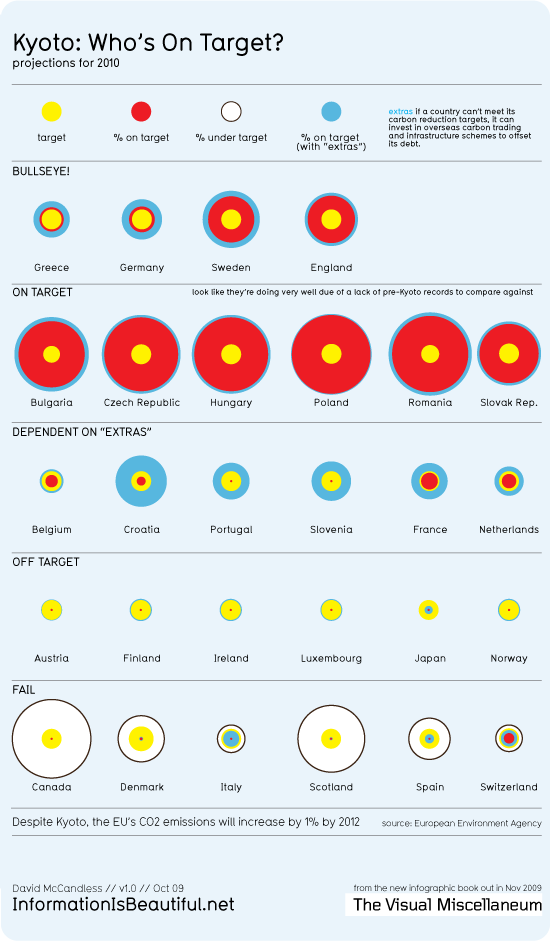
I love graphs. I really do. And I just found this Information Is Beautiful-graph by David McCandless (CC-Lizenz) and thought I should share it.
At first I had a few difficulties to understand it, but then I read David’s explanation:
If the red circle (% on target) is larger than the yellow, the country is doing well.
If the red circle is smaller than the yellow, it’s doing badly
If the blue circle is larger than yellow, the country is relying on ‘extras’ to hit its targets.
If the country has a white circle, its emissions have actually increased. It’s substantially under-target.
Have you been aware of the presented data? I guess there is a lot of interpretation to do here.
For example, I was very surprised by Denmarks bad performance as the country did present itself very aware of the whole problem when we were there. On the other side Germany is doing quite well. Is this a result of the green party being in power for some years, or are the country’s Kyoto limitations only very weak?
This post is also published as part of the international Th!nk 2 blogging contest – feel free to comment on this topic there

2 Antworten auf „Visualizing Kyoto – Who is on Target?“
Na vielleicht hats ja was damit zu tun, dass ein signifikanter Teil Deutschlands aus einem ehemaligen Ostblock-Staat besteht, die alle durch den Zusammenbruch der kommunistischen Vorstellung von Wirtschaft recht gut dastehen?
Und vielleicht auch damit, dass das mit den massiven Investitionen in Wind- und Solarenergie doch nicht so gut funktioniert hat, wie sich das Spanien und Dänemark vorgestellt haben?
Und England steht deswegen so gut da, weil es mittlerweile kaum noch Industrie hat – na toll, das brauchen wir auch!
Außerdem schrumpften die Bevölkerungen vieler osteuropäischer Staaten. Deutschland stagniert. Österreich wächst.
Die Daten sind veraltet (von 2006) und beim österreichischen Beitrag (Link) greift man sich auf den Kopf. Wir sind 30% über dem Ziel und laut Angabe im Report erwartete die Regierung damals ein Erreichen des Ziels zur Hälfte mit Ausgleichszahlungen und zur anderen Hälfte mit noch zu implementierenden Maßnahmen. Da hat man damals wohl einen Praktikanten dazu abgeordnet der EU einen tollen Fünfjahresplan zu schicken.
Diese Grafik, bzw. die Daten sagen uns wenig über konkrete Politik. Die Regierung hat praktisch keinen Einfluss auf den CO2-Ausstoss, zumindestens keine, die wiedergewählt werden will.
Und die Strafzahlungen zahlt die Allgemeinheit für relativ unkontrollierbare Phänomene, wie die Entwicklung der Industrien, Einwanderung in einem grenzenlosen Europa und das Fahrverhalten und die Reisevorlieben von Billigfliegern und motorisierten Mitbürgern.
Sowohl die Ziele als auch die Mittel der internationalen Klimapolitik sind unfair als auch nutzlos.